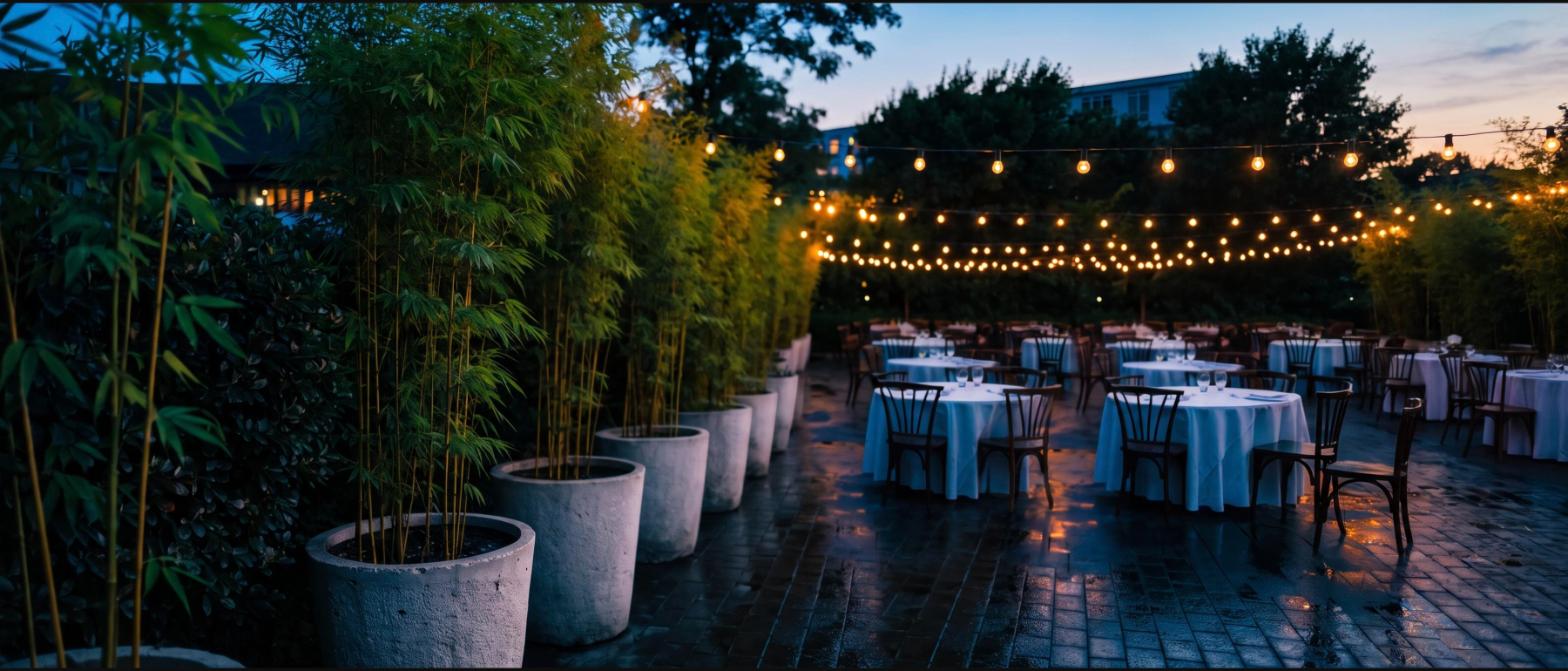
Potted bamboo has become a standard tool on outdoor builds, and for good reason. It gives you eight or ten feet of visual screening from a footprint about two feet deep, it reads as intentional landscaping rather than rented pipe and drape, and it photographs far better than a scrim wall. For hiding a loading lane, a generator, or a neighbouring parking garage, nothing else does as much per square foot.
The problem is which bamboo. Clients increasingly arrive having done their own research, and the name they arrive with is almost always the same one.
What Fargesia Rufa Actually Is
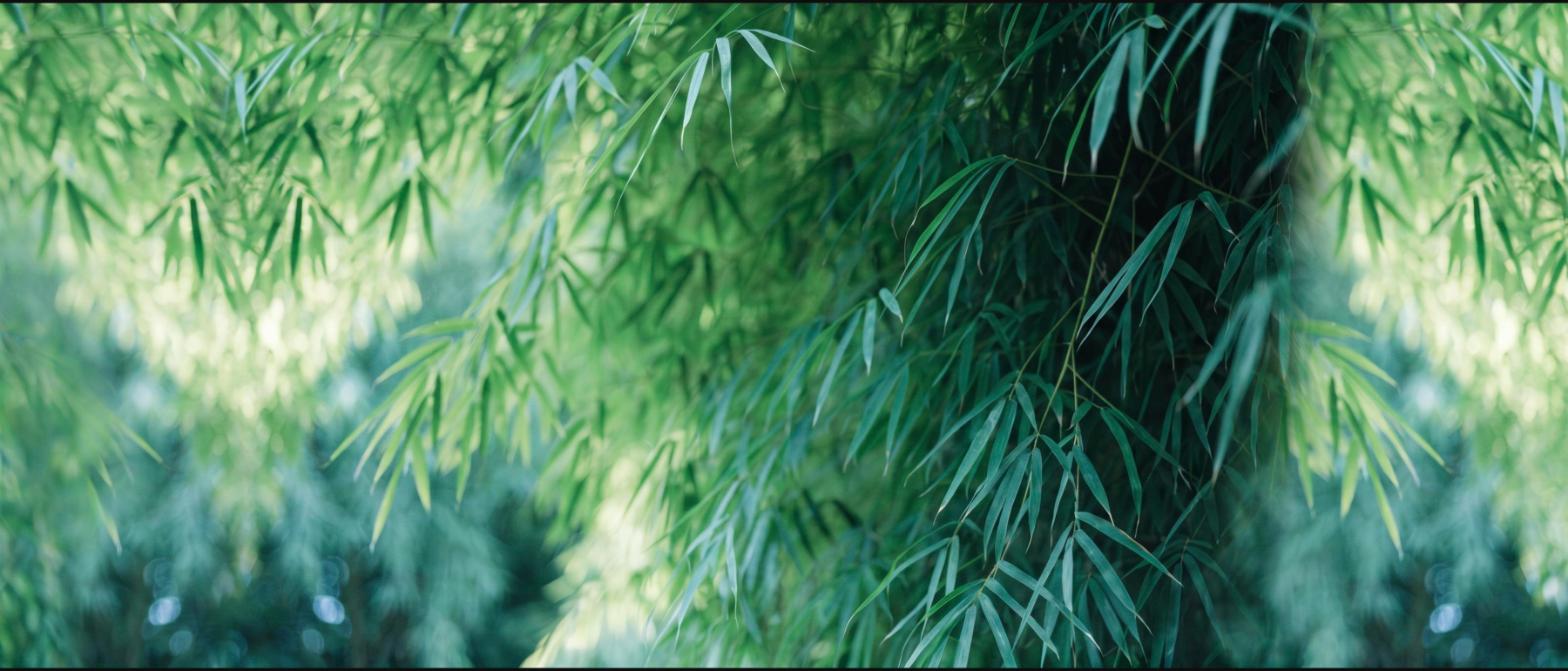
It is a genuinely excellent plant, which is why it dominates the search results. Rufa is a clumping species from the mountains of Sichuan — it does not run, it stays in a tight crown, it tolerates full shade, and it has a soft weeping habit that photographs beautifully. Anyone researching fargesia rufa bamboo will find it recommended constantly as the safe, non-invasive choice.
All of that is true. In the Pacific Northwest, the Northeast, or northern Europe.

Watch: The Best Clump Forming Bamboo You Can Grow — Fargesia Guide (YouTube)
The Gulf Coast Problem
Fargesia is a cold-climate mountain genus. Rufa is hardy to around zone 5 and is generally rated to about zone 8 at the warm end — and that warm limit is the one that matters here. It struggles in sustained heat above roughly 90°F, and it struggles more when that heat comes with humidity and warm nights that never let the plant recover.
Houston is zone 9a. A rufa delivered in April will look superb through a spring gala and will be visibly unhappy by late July. Leaf curl, browning tips, and then thinning from the inside out. For a single-evening install that may genuinely not matter — but if the plants are being bought rather than rented, or held in a yard between events, you are buying a plant with a summer expiry date.
What to Spec Instead
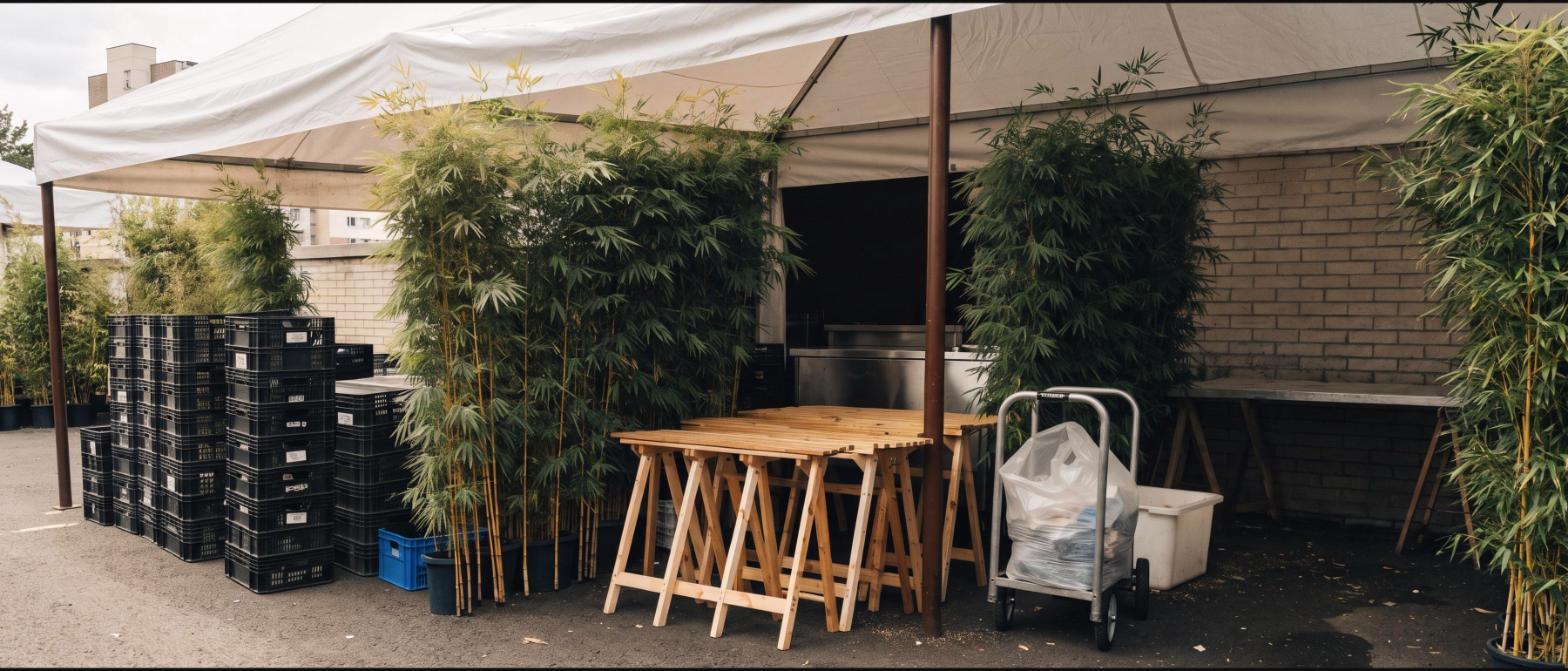
For this climate the clumping species to ask for are tropical rather than montane — the Bambusa group. Several are reliable through Gulf Coast summers, reach screening height comfortably, and still clump rather than run, which is the property the client actually cares about.
Three practical notes for an outdoor build. Specify the pot, not just the plant, because matching containers are what make a rented screen look designed. Check the weight before you commit to a rooftop or a pier-and-beam terrace — a planted container at screening height is heavy. And plan for wind: a tall narrow plant in a shallow pot is a liability on an exposed site, and ballast is cheaper than an incident report.
The client is not wrong to ask for clumping bamboo. They are just asking for the wrong latitude.